
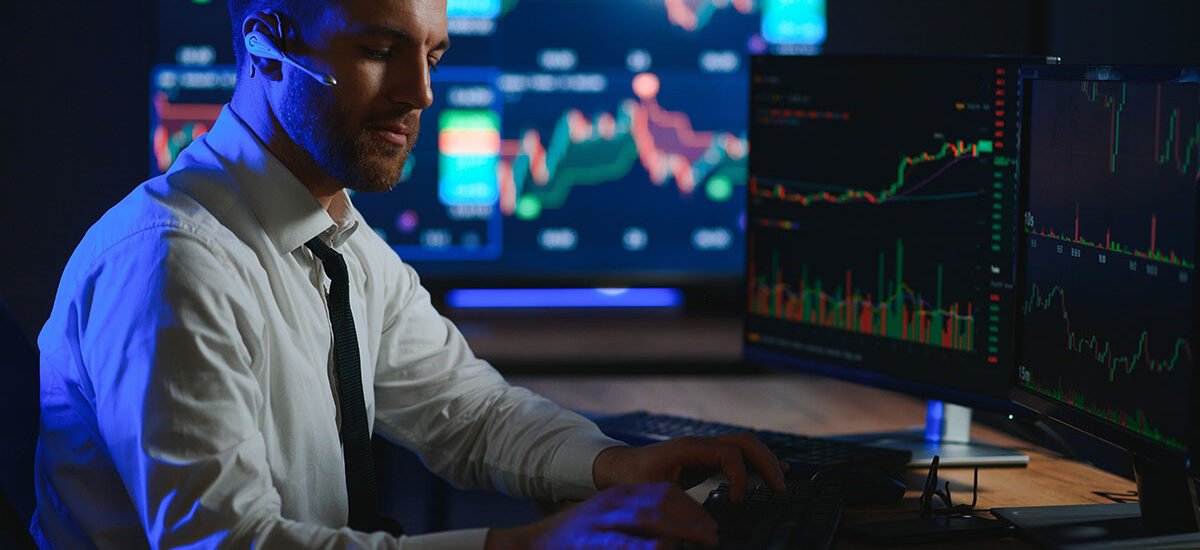
The financial markets offer immense opportunities, yet the majority of retail traders struggle to achieve consistent results. While market volatility, lack of experience, and poor risk management all play a role, one factor stands out above the rest: emotional decision-making.
Fear, greed, hesitation, and overconfidence often lead traders to abandon their plans at the worst possible moments. A trader may exit a winning position too early out of fear or hold onto a losing trade hoping the market will reverse. Over time, these emotional decisions can significantly impact performance.
This is where algorithmic trading provides a powerful advantage.
Algorithmic trading uses predefined rules and market conditions to execute trades automatically. Instead of relying on emotions, decisions are based on data, logic, and tested strategies. Once a strategy is deployed, the system can monitor markets continuously and execute trades according to specific parameters.
Key benefits of algorithmic trading include:
• Elimination of emotional bias from trading decisions
• Faster execution compared to manual trading
• Ability to monitor multiple markets simultaneously
• Consistent application of trading rules
• Improved risk management through predefined controls
However, successful algorithmic trading is not simply about automation. The quality of the underlying strategy, risk management framework, and execution infrastructure are equally important. A poorly designed algorithm can lose money just as quickly as a poorly disciplined trader.
Professional traders increasingly combine market research, quantitative analysis, and automated execution to gain a competitive edge. By leveraging technology, they focus less on reacting emotionally and more on following a structured process.
The future of trading belongs to those who can effectively combine human intelligence with technological efficiency. Algorithmic trading is not a shortcut to profits, but it is a powerful tool for achieving greater consistency, discipline, and scalability in today’s financial markets.